
There are four sizes: 2m³ from R850, 3m³ from R930, 6m³ from R2,700 and 8m³ on request, each including delivery, collection and licensed disposal over a weekend hire or 2 to 3 days midweek.
Choosing between them comes down to volume, not weight. On most household jobs a skip fills up by volume long before it reaches its tonnage limit, so the practical question is how many bakkie loads your waste would take.
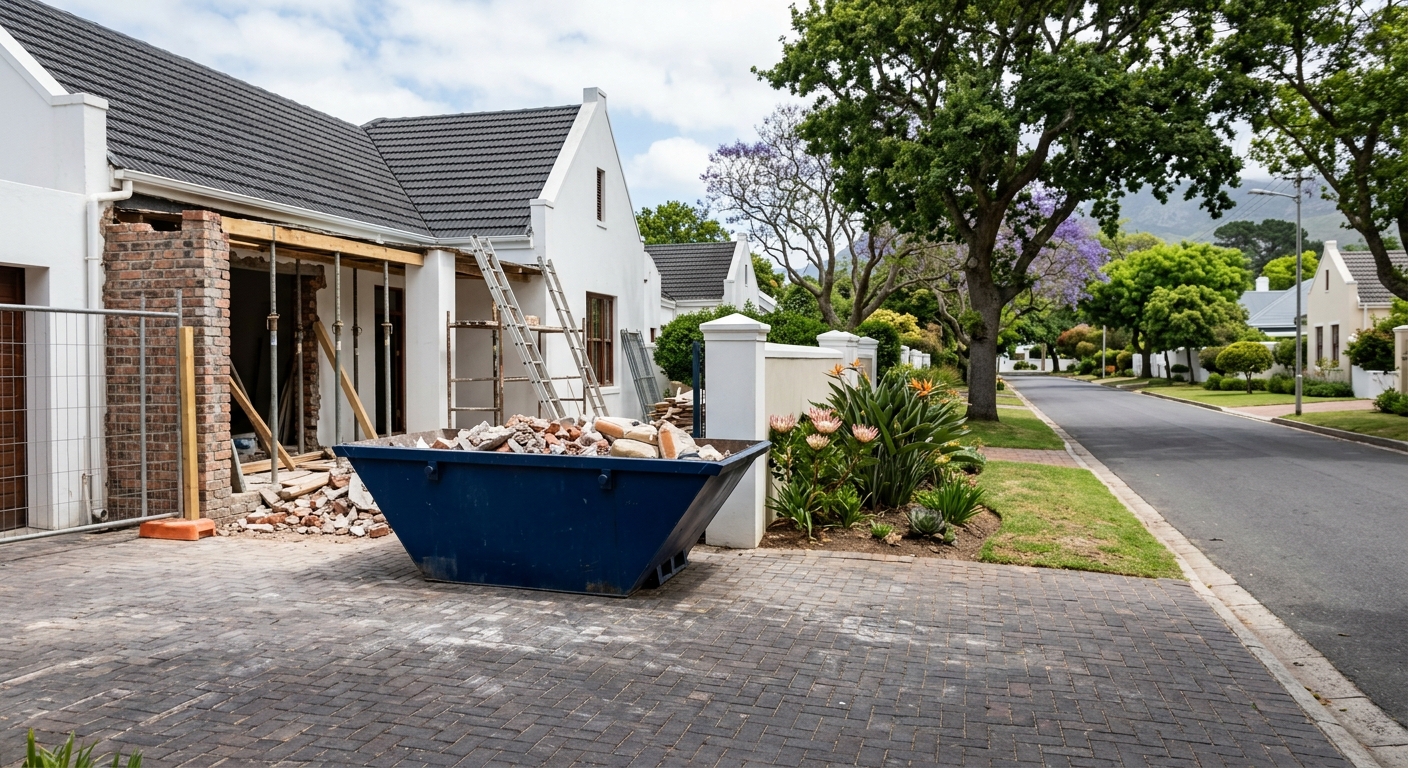
The four side by side
| Size | From | Holds | Bakkie loads | Best for |
|---|---|---|---|---|
| 2m³ mini | R850 | about 25 refuse bags / 8 wheelie bins | 2 bakkie loads | Small garden clear-outs, single-room renovations, bathroom strip-outs |
| 3m³ midi | R930 | Ask us | Ask us | Kitchen refits, garage clear-outs, medium garden jobs |
| 6m³ builders | From R2,700 | about 75 refuse bags / 25 wheelie bins | 6 bakkie loads | Building rubble, full-house clear-outs, renovation waste |
| 8m³ maxi | Price on request | about 100 refuse bags / 33 wheelie bins | 8 bakkie loads | Construction sites, demolition, estate clearances |
What each one takes in practice
- 2m³: one bathroom strip-out (suite, tiles, vanity), a small garden clear-out, or the contents of a single garage bay. The exact measurements are on the 2 cube page.
- 3m³: a fitted kitchen removal including units and worktops, or a two-bedroom flat clearance.
- 6m³: the rubble from a single-room extension, or a full house declutter including furniture.
- 8m³: a full roof strip, a double-garage demolition, or an estate clearance where furniture and general waste go out together.
Bulky-but-light items decide the size more often than heavy ones. A three-seater sofa takes roughly 1,5m³ once it is broken down, and a fridge or a chest freezer takes close to 1m³ on its own, so two pieces of furniture can fill a mini before any building waste goes in.
How much space does it need?
A driveway is faster and cheaper than the street because it avoids the City's permission step. The limit is width: a 6m³ needs a minimum of about 3 m clear, and the truck needs overhead clearance free of branches and cables to lower the bin. A skip on a public road or verge needs the City's permission at every size; a 2m³ on the pavement needs the same as an 8m³.
When does weight decide?
Concrete, sand, brick and tile are dense enough to reach the tonnage limit while the bin still looks half empty. For those, order one size down and fill to roughly two-thirds; the rubble page covers this. Mixed household and garden waste goes the other way and reaches the rim first. Every skip is level-loaded to the rim, because anything above it cannot be sheeted or legally transported.
Extension rates and the City's disposal tariff are on the price card. For two bakkie loads of clean sorted waste, a free municipal drop-off is usually cheaper than any skip.